Showing posts with label magic sacraments. Show all posts

Saturday, December 10, 2022

Frater Barrabbas Author Literary Tour - Part 8 - Sacramental Theurgy For Witches


This book, unlike the previous, is still in manuscript form and hasn’t been submitted to Llewellyn for publication. I am pretty certain that they will want to publish once they get it, since it fits into a set of books that are good sellers. (Note: I am signing a contract to publish this book soon.) It makes good business sense to continue a series if it is popular and people are buying the books. Still, I am not in the literary business to make money as much as I am writing books to ensure that my legacy of knowledge and practical experience is shared with a large audience. Perhaps I can even imagine that these books might be getting used and thus changing the way that Witches and Pagans practice their magic. I can only hope that such a process is underway.

I wrote this book last summer and it only took me two months to complete it. A lot of the material used in the book I already had on hand, and I was very keen on sharing that material with my community. Still, one might ask what could sacramental theurgy possibly have to do with Witches and Pagans. The title sounds kind of pretentious and very high-brow, sort of like some book on philosophical magic or some trendy breed of ceremonial magic. Of course, I don’t write high-brow books on Witchcraft magic. I leave that to the academics, whose works on the history of magic and witchcraft are now becoming more numerous and quite fascinating. This book is purely about a kind of Witchcraft praxis that is advanced, but it is actually quite obvious and deals with something that is fundamental to Witchcraft religious magic.

Here is the advertisement that I have written to be used with this book when it is published.

Theurgy is defined as a magical operation that induces the Deity to perform a paranormal operation to benefit an individual or a group or to refrain or block an occurrence that would cause harm. The Greek word ‘theurgy’ is interpreted to mean, “God Work”, so it is a form of high magic that directs the supernatural powers of the Deity to either make something materialize or to block something from happening. A theurgist is someone who has the ability to directly converse with the Gods and Goddesses and to either urge them to act or to abrogate their powers and assume their identity and then perform the desired work.

While this kind of religious magic was considered the ultimate mastery possessed by Neoplatonic philosophers of late antiquity, such a practice and its associated perspective is very relevant today for modern Pagans and Witches. It is, in fact, the natural evolution of our practices of liturgy and magic that the two approaches should become united into an advanced formulation of magic, a kind of Witchcraft Theurgy. This evolution is already occurring today, and in fact it represents the cutting edge of Witchcraft practices that certain select senior members of our community are developing and practicing in private gatherings, covens and groves.
 
Witchcraft Theurgy can be divided into two basic categories: sacramental magic and the mysteries of transformation. In both of these categories the Deities are engaged and their impact enlarged so that the magic performed is done explicitly through them. This would require not only defining the Deities in greater intimate detail than what is typical in a coven or group, but it would also require expanding the scope of Deities so that the world surrounding these Witches would be filled with Deities representing the cosmic, regional and local geographic domain of the covenstead.


The core concept presented in this book is that when someone undergoes the ritualized process of godhead assumption, anything that they bless or imbue with their assumed powers becomes a sacred object, whatever its form. In traditional Witchcraft, the drawing down of the moon is followed with the rite of cakes and wine, which functions as a form of communion between the living Deity and the coven of Witches. It follows that anything else so blessed by that godhead, such as oils, balms, amulets, tools or even initiated members, becomes imbued with the powers and essence of that Deity. What is missing is, of course, the bloody sacrifice, but everything else is there to tie these modern practices to some of what was done in antiquity. This is, then, the basis for the generation of sacraments, and their use in Witchcraft or Pagan magic is a kind of magic defined as theurgy. It is also the foundation through which the mysteries are experienced and heightened. This is because it is through the Deities and our intimate contact with them that this kind of magic is possible.

When pagan religious cults were banned and disappeared in the Roman empire certain practices were absorbed into Christianity. While the obvious animal sacrifices were no longer practiced, other offerings were encouraged. Catholics had replaced the pagan bloody sacrifice with the consecration and offerings of wine and bread and brought into vogue the concept of transubstantiation to justify that such offerings were in reality the blood and body of Christ. Such a replacement in a religious context brought the ancient ideas of magic into the cultic practices of Christian liturgy. This is because the concept of transubstantiation is a magical one, and it has nothing to do with theology or sacred writings - it is a magical substitution.

Those magical ideas also caused the spread of ideas that other sacraments, such as baptism water, consecrated oils and balms, as well as relics, the blessings of bishops, prelates and even anointed kings carried the attributes of godhead within them and could be used to charge and bless both the community and individual possessions and undertakings. These were old magical ideas that had been a part of the religious practices of the pagan era, and now were brought into the religious practices of Christianity. It is ironic that a supposed monotheistic religion became so infused with idolatry and magical practices that both Islam and Judaism found the practices of Christianity liturgy offensive. It is also no wonder that such practices brought about the reformation in the 16th century. By the 20th century, the Catholic church had quietly shelved those ideas that were magical and pagan in origin, and even changed the mass to remove all such “superstitions” from their practices.

Yet to the late 20th century practicing Witches and Pagans, such ideas fit perfectly within their creeds and praxis, so some of those rites were reverse engineered into the rituals that adherents of these new religions practiced. What you had were practices of godhead assumption, as derived from both the Catholic mass rite and the practices of the Golden Dawn, and the rite of communion of cakes and wine consecrated by the hand and breath of the godhead. I saw that appropriation as the first step down a slippery slope, which led into the magical well of full and complete ownership of the magic that was once used by Christian Catholics. What was once used to bolster the faith within a population of recently converted pagans could now be used to enhance the religious magic of a modern Witchcraft and Paganism.

As I have stated, the core of the magical religious practices of these new faiths was the rite of drawing down a targeted Deity into the body and mind of a specialized and trained adherent. In the new faiths of Witchcraft and Paganism, it was not only conceivable that a person could masquerade and personify their chosen Deity, it was an expected part of the praxis. With such a ritual acting as the central feature of this new pagan faith, it would seem a natural evolution that all things that are holy and sacramental would come from this transformed individual through their blessings of touch, blowing of breath and kiss.

While this was something that ancient pagan cults would have allowed, it was not actually part of their regimen. They had beautiful temples, priests and priestesses and grand statues to represent their deities for the state religion, but a lot of religious activity went on in the private sphere, and this is where sacred persons could assume the mantle of a deity on a temporary basis and act as intermediaries for the personalized aspects of the Deities. What actually transpired in these private religious occurrences are not plainly known nor understood, but it is likely that they modeled what passes today as the practices of home-based worship, the giving of offerings and prayers and the making of sacrifices. These rites are practiced in some form in modern day India, and from them we can deduce the practices of ancient pagans in the Greco-Roman world.

Still, this practice of godhead assumption brought the numena of the Deity into the group so that the adherents could commune and worship that Deity directly and intimately. A human personifying a Deity could then also bless substances, such as cakes, wine, oils, anointments and jewelry (as amulets). There could also be requests for aid, healing, prophecy and guidance. This rite was where the worshipers and the godhead met to strengthen the spiritual bonds and empower the members. This practice became the center of cultic practices for both Witchcraft and modern Paganism.

One of the issues that I have with this practice is that it can lead to abuse and coercion, particularly if the person personifying the godhead was also the leader of the group. I have presented suggestions that the rite of godhead assumption be performed by someone who has prepared themselves for this exclusive act, while the leadership of the group be performed by others who not so engaged in the process of godhead assumption. I feel that it is necessary that the leadership of covens should not also be engaged with performing the godhead assumption so that they are not empowered as to become unassailable autocrats of the coven. After all, who would argue with the powers and commandments of the coven Deities? Instead, temporal authority should not be mixed with temporary Deity based empowerment. I believe that the mixture is toxic to the proper governance of a coven or group.

Additionally, I believe that the coven or group should be able to judge the level of manifestation of the Deity that occurs during a godhead assumption. There should be built in mechanisms that can be used to judge the efficacy of the drawing down rite. I present 10 stages that a drawing down rite can be observed to achieve when the godhead manifests through the target medium. First, I believe that there should be three simple questions that are presented to the medium when the godhead is fully manifested. The first two are simply questions that request the godhead to define itself by name and quality, and to describe its nature and character. A third question is secretly determined by the group without the prior knowledge of the medium, and it is requested to the Deity to outline its purpose for that evening’s working. 

The coven, apart from the sequestered medium, has determined the purpose of the evening’s work, and if the medium is able to clairvoyantly and accurately describe that purpose, then the group can be certain that the manifestation of the Deity is truly a powerful one. Other phenomena can also occur when the divine is immanently and tangibly present, and these I outline in the description of the ten stages. I also briefly discuss what a regressive godhead assumption is, and that it should be gently stopped and aid given if the medium should show signs of a seizure or bodily stress. The coven should document each and every godhead assumption and give a grade, based on the ten stages of Deity manifesting.

There is, however, a practice that is above and beyond the coven drawing down rite, and that is the full godhead personification. This is lifetime practice, but it can be immediately approached through an ordeal of devotion and the single minded focus and immersion into the being and persona of a selected Deity. The true regimen is a three month ordeal that starts out in a regular devoted fashion and becomes more intensive and focused as the moon goes through three cycles. A lesser ordeal has only one lunar cycle, but this is the kind of ordeal where a person seeks to be fully engaged and immersed within the spiritual body of the Deity. Some individuals will make this kind of ordeal and work their life’s sole purpose, where all else in life is sacrificed so that the sage is free to occasionally act and function as a full personification of the godhead. What she or he does while in that state of personification becomes the Deity performing blessings, empowerment, generating sacraments and aiding in the magical endeavors of initiated members. This, too, is sacramental theurgy in its most intensive and impressive style.

Other ritual workings are discussed in this book, such as the triple consecration rite of specific cult objects, such as the Stang, Besom, Cauldron, various statues or busts of the Deity, and individual amulets. These are considered sacred place-markers or representations of the Goddesses and Gods and function as both sacred objects as well as magical tools. The rituals of the mass and the benediction, reverse engineered from their Catholic sources and rewritten to celebrate and worship the Deities of the coven or group are presented, with full examples of those rites. The mass generates sacraments in a similar manner to a drawing down rite, and the benediction is used to super-charge a magic temple using the sacraments from the mass rite. These two rites are used to sacralize any magical working so to manifest within such a working the aid and manifestation of the Deity. I also present the methods of consecration of amulets and relics, and even the animation of a statue, bust of picture of a Deity, representing the full spectrum of sacramental theurgy. Still, I also discuss the elements of sacred sexuality and how it can employed in the magical workings of Witches or Pagans.

In the final section of the book, I cover the temporal mysteries of the sun and the moon, and present magical rites to be used for lunar and solar mystery workings. Another important mechanism in this kind of magic is the sacred grove, and I not only define the grove and how it is to be developed and used for working sacramental magic outdoors in the awesome beauty of nature. This brings the reader to the final chapter where I discuss the elements and workings of a Grand Sabbat that bring all of the previously discussed tools, methods and practices together in a powerful that brings to life the material embodiment of the Goddesses and Gods through personification into a temporary sacred community of Witches and Pagans.

I believe that this book will bring together practices and approaches to Witchcraft from a liturgical and magical perspective together into a single powerful practice, where the Deity will be directly engaged and embodied to assist in the magical aspirations of the individual, the group and the greater community. This book will be the capstone to these kinds of practices, and make more obvious the sacramental theurgy that is a natural function of the modern Witchcraft and Pagan practices.


Frater Barrabbas

Wednesday, August 6, 2014

Magical Gnostic Eclesia - Magical Layers


Magic as layers of prismatic energy structures.


One of my favorite quotes from the movie Shrek goes like this:

Shrek: Ogres are like onions.
Donkey: They stink?
Shrek: Yes. No.
Donkey: Oh, they make you cry.
Shrek: No.
Donkey: Oh, you leave em out in the sun, they get all brown, start sproutin' little white hairs.
Shrek: NO. Layers. Onions have layers. Ogres have layers. Onions have layers. You get it? We both have layers.
Donkey: Oh, you both have layers. Oh. You know, not everybody like onions.


The magical workings that I perform have many layers of prismatic energy structures, one on top of the other, arranged from the foundation to the most intricate final pieces. Because I work with a vortex energy container I can build up these layers over time instead of having to do it all in one evening’s working. I have previously written about the vortex and its qualities, and you can find that article here.

The vortex allows me to perform a working in parts and thereby build up the complete structure in stages so that it achieves the final climactic working at precisely the right moment. That might take a whole weekend, or it might take a few weeks in a row. This characteristic allows me to carefully build up an overall working and focus on a strategic stage that is one of several parts of it. The result is an accumulation of all of the previous workings integrated into a holistic composition of prismatic energy structures, symbolic meanings, themes and occult ideals. Magical formulas are used to tie and bind all of the disparate parts together functioning like matching seams, uniting both the individual sections performed at a single night’s working as well as the overall working that spans days or even weeks.

As far as I am aware the use of the vortex and the unification of layers and stages of a magical working are unique methods. Even so, I didn’t invent this ritual technique from nothing. I did use other ritual examples as the model for this technique and evolved it over time. The source model for this kind of magic can be found in the Golden Dawn ritual for the Rose Cross and the formula for LVX. This was a simple rendition used in a specific ritual instance that I experimented with so many years ago, and I discovered that it could be integrated into any ritual and used to unite all of the parts. It functions as a kind of summary or recap that recapitulates the whole ritual in a simple formula. Yet studying that original Golden Ritual I came up with a more complex hybrid technique that I use today. It allows me to have many levels or layers to a ritual complex, but it integrates the various parts into a whole structure. Without it, the layers would easily become disassociated and break down into distinct processes separate from the holistic working.

While the vortex functions as a centralized container that holds all of the layers together, the various formulas at each stage, and the grand formula at the end ties everything together and fosters a powerful singularity of energy that functions as the overall core of the ritual working. I have presented this methodology in greater detail in two previous articles posted in November of 2010, and you can find them here, and here

However, allow me to quote a couple of paragraphs from the second part of that two-part article on Sacred Geometry in the Energy Theory of Magick, which succinctly (although a bit redundantly) describes what the magical formula does when deployed in a magical ritual.

Formula letters are specifically used to pull the points of the ritual structure together at the terminus or ending of that magickal event. This is done in a process that is called “Analysis of the Keyword” as found in the Golden Dawn ritual of the Rose Cross. Therefore, the formula letters (often in Hebrew, but also represented by Greek, Latin, Coptic or Arabic) are used to build the keyword, which acts as the touchstone for the entire ritual structure. How this is done is that the letters of the keyword are intoned at the associated points in the magick circle, along with the devices, declarations, signs (gestures) and visualized colored energies, and then when the ritual structure is complete, the formula letters are intoned together to form the keyword and a final declaration is made in the center of the magick circle.

In this manner, all of the points of the ritual structure are fused into a single keyword and a single declaration. The analysis of the keyword construct can be performed at the end of each ritual structure, and it can be performed at the end of the final ritual structure in a functional ritual. By establishing a synopsis of the fully functional ritual and the ritual structures that are contained by it, a powerful resonance of union and fusion is produced, representing the perfect expression of Spirit within a ritual magickal construct. Having this element throughout a ritual causes a subtle emulation of the spiritual essence of the godhead to be manifest in the working. This factor will ensure that the rite produces a transformative effect when it is performed. ”

I might also add that the formula employs the Qabalistic method of Notaricon, which is used to generate and explode formula acronyms. I can also use the method whereby the letters of a formula are matched against specific Tarot cards and also Pathways on the Tree of Life. Of course, I have to comparatively create analogues for the Hebrew letters if the formula happens to be based on a language other than Hebrew, such as Greek, Coptic, Arabic or Latin.  

Anyway, all of these various structures that I employ in the creation of a ritual working function as mechanisms to express and establish energies structures and also to integrate all of these various structures into a seamless whole. It might seem very complex and even cumbersome at first glance, but when breaking any of my rituals down to their essential structure and associated elements, it is actually quite simple, elegant and efficient. A magician can expand such a ritual so that there is quite a bit of declarative verbiage that has to be expressed, or it can be kept to a minimum so that the ritual actions and expression are emphasized instead. It really comes down to the tastes and esthetics of the magician who is authoring the rite. Some magicians are minimalists and others are quite verbose, and still others like to establish a balance between these two extremes so that others may participate in the ritual and not miss any of the subtle and important meanings and significance expressed with it.Too little verbiage makes a ritual cryptic and idiosyncratic, and too much verbiage makes a ritual lifeless, dull and exceedingly boring.

However, there is also an element of the sacred that is an important and strategic part of my more elaborate and ordeal based magical workings. How I employ the sacred in my workings, besides the obligatory assumption of Godhead, is to build a very special sacral magical foundation into every important and strategic magical working. This is done whenever I employ the magical mass to energize, empower and sacralize the working. Immediately after I perform the circle consecration rite, I will perform a magical mass (to generate sacraments and partake of communion) and then I will perform a kind of simple benediction rite, placing charged and consecrated host fragments to the eight nodes of the magic circle and the central altar. What this does is to consecrate, sacralize and greatly empower the magical environment. I call this basic foundation the Magical Eclesia or Sacred Magical Domain.  

The established magical circle will contain the sacred power generated by the mass, and the very magic circle will be charged with the holy sacrament, making it inviolable. It also ensures that the magical working that is performed within that sacred container is blessed and sanctioned by the holy spirit and the various deities functioning through the media of the magical mass. Therefore, the magical mass rite has to be associated with a specific pantheon, and it must also focus on a specific godhead within that pantheon that represents the sacrificed deity. The reason why there has to be a sacrificed godhead is that such a deity then becomes the embodiment of the sacramental wine and bread, and without such a deity attribute the whole mechanism of the mass is invalid. Perhaps this explains why the Christian church glorified the crucified savior and made it central to the mass communion rite, since the emphasizing the Roman method of executing a seditious prisoner seems so odd to outsiders. However, in the context of the mass communion rite it makes perfect sense.

So the theme and pantheon associated with the magical mass sets the entire spiritual tone for the magical working. If the theme happens to be gnostic, then the spiritual entities and forces will be related to a specific system of gnosis. This is also true if the theme is pagan, theosophical, thelemic, Enochian or related to some other spiritual-magical system. However, when I use the term gnosis, what I am really referring to is the process whereby a person directly and intimately encounters Spirit in whatever form it is perceived and sensed. This encounter with Spirit is important because it reinforces the magician connection with the Godhead and also opens up the world of spirit for magical operations.

This technique of using sacraments to perform feats of magic isn’t new, since it was until recently an important trope of the Catholic church. In fact, I picked up the idea from both Michael Bertiaux and Bill Schnoebelen, and I suspect that while Michael merely talked about it, Bill was the one who actually made use of it. What I did was greatly expand on the idea and incorporated it into the core rituals for the intermediate and advanced magical systems of the Order. I can also recall that Stephen Hoeller reacted with outright horror so many years ago when I told him exactly what I was doing when performing a mass. While other traditions, including the Catholic, approach the mass as a central rite and vehicle for maintaining a tangible connection with the espoused spiritual pantheon, I have advocated using the mass as a purely magical generator of power, and secondarily as a media for spiritual communion. I believe that my approach to the mass is rather unique amongst the adherents of the Western Mystery tradition. It is also likely that my approach would be mildly shunned or outright condemned by the other traditions.

Unfortunately, I have written only a couple of articles on the topic of the magical mass and the use of sacraments in magic, as well as magical relics and reliquaries. I have two articles that I wrote for members of my Order, but these have not yet been released in their current form to the public. Therefore, the two articles that I have posted to my blog will have to suffice in giving my readers a general overview to the topic of performing a magical mass and using the sacraments to empower one’s magical rituals, and you can find them here, and here. At some time in the future I will endeavor to publish the other two articles, probably along with the material associated with invocation and evocation.

The Magical Eclesia is the sacramental foundation for all magical ordeals and the practice of higher invocations and evocations in the Order. The use of the wine and host to initiate the quickening process of spirit manifestation is built into the rites of invocation and evocation as practiced in the Order of the Gnostic Star. Combined with the vortex and other specific magical techniques, the Magical Eclesia produces a profound and transformative impact on the ritual workings layered through it, generating an occult process whereby thoughts become symbolic form and symbolic form becomes spiritual manifestation. Using such a mechanism as the Eclesia allows the powerful fusion of the energy techniques of magick to merge hostically with the spirit techniques of magick, producing a hybrid that is greater than either one alone.

Frater Barrabbas

Thursday, June 2, 2011

Mystery Gateway - Realizing An Invocation


For a magician who is operating through the magickal methodology of total immersion, the mystery gateway is one of the most powerful tools that can be used for a variety of magickal effects. Perhaps the most important and essential predication for this magickal mechanism is that the gateway is internal to the outer boundary of a consecrated magick circle. It is a gateway that opens within and overlays the magickal structures erected within the magick circle. We have already discussed this theme in a previous article, and I would advise you to re-familiarize yourself with it to enhance your understanding of this topic. You can find the link to that previous article here. However, there is a very specific Mystery Gateway used in the technique of invocation as performed in the Order of the Gnostic Star. That specific rite is called the “Gate of Revealing,” and this article will examine that ritual in greater detail.

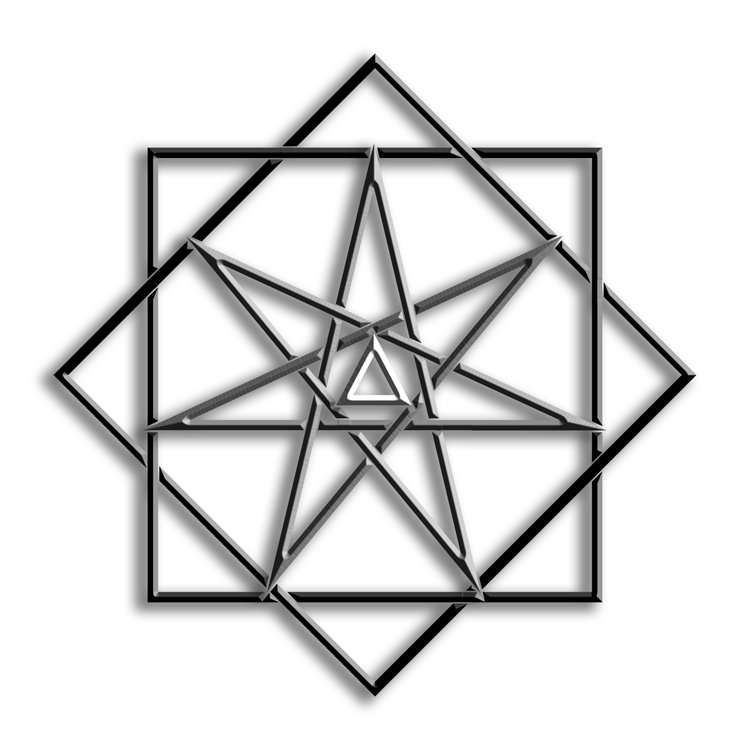
We have already recently covered the ritual mechanisms used for the specialized Power Octagon and the Activated Septagram. I have indicated that through these two rituals alone, a magician might be able to fully invoke a spirit into manifestation in some manner. Yet the third step in this process performs two amazing and very necessary tasks. The Mystery Gate functions as a typical gateway in that it joins together into a unified field all of the previous ritual energy structures, and it unlocks and reveals a distinct spiritual domain, which is essentially based on the prior symbolic configuration of octagon and septagram. The Gate of Revealing thus fuses the octagon and septagram to produce a fifteen pointed structure with a triangle in its center. I call this fifteen pointed ritual structure device, the Quintedecim Complex.

When the magician performs an invocation of a spirit for the first time (in the Order), then he will perform certain specific steps to erect a vortex domain and an underworld gateway, and once within that domain, he will execute the steps to ensure that the spirit will materialize and become completely accessible. How this materialization process is accomplished is through surrogates for the blood and flesh of a victim, and those surrogates are the consecrated wine and host of a special performance of the Mass.

That I use the substitution of wine and bread instead of sacrificing an animal to fully materialize or quicken the etheric body and spiritual intelligence of a spirit would seem to be in agreement with the changes that have occurred in religious and magickal practices since antiquity. Some might find this substitution to be even worse than animal sacrifice, seeing it as a form of sacrilege. This accusation might be true if I were a Christian and the host and wine were consecrated in the name and guise of Jesus Christ. It’s even possible that Satanic magicians in the past did just that, incorporating the Black Mass for the purpose of empowering a goetic evocation.

However, the substitutions that I use are consecrated to pagan deities, particularly those with an easily predicated chthonic aspect, so I am giving to the domain of spirit something that actually belongs to it. The consecrated host and wine that I use in my variation of the invocative Mystery Gate are to be employed in nourishing and empowering the spirits that I generatively summon, and they are not to be used for any kind of communion rite. After the invocation is completed, these sacraments are given to the earth as a form of proper disposal.

I can remember, years ago, having a discussion with the Gnostic patriarch, Stephan Hoeller, who was visiting Kansas City at the time (autumn ‘88), about my mechanism for performing invocation. He asked me if I ever used any human waste products in my workings (like some other magicians are reputed of doing), such as semen, urine, saliva, mentrual blood, fresh blood, raw meat, or feces. I told him that I had no need for such things in performing an invocation because I used consecrated hosts and wine instead. I suspect that Stephen was initially relieved to hear that I didn’t use these organic substances, but then quickly realized that I used the sacraments instead. He was quite horrified and said nothing more on the subject. Still, I suppose that he didn’t realize that those sacraments had nothing to do with any deities that he might even consider to have contact with, and that I wasn’t violating any rules or boundaries that he would have considered sacrosanct. Others may believe this technique to be questionable at best, a kind of apostasy at worse, yet I have made certain that my intention and practice in this regards are done in complete accordance with the Godhead that I work through.

Now that I have dispensed with the most likely controversy in regards to the invocation Mystery Gate, let us continue with our discussion about this most critical of rites in the three tier invocation process. 

The ritual Gate of Revealing has a basic preliminary operation that is done every time it is used. That operation is the drawing of an inner circle, placing the Quintedecim Complex trigon on top of the stack representing the Power Octagon and the Activated Septagram and then charging it with an invoking spiral and a violet colored energy. Twenty-two Trumps of the Tarot are placed around the periphery of that inner circle, representing the specific pattern of initiation that the magician is following. This pattern is then charged using the control crystal that normally is attached to a necklace that circles the magician’s neck. The magician projects the power of the crystal into each card, following the pattern of the four stages (of the Cycle of Initiation) in a widdershins vector. Upon the Q-Complex trigon, the magician places the consecrated sigil of the target spirit, where it will reside until the invocation is to be performed. In this manner, the core of the inner magick circle is set with the empowered invocation process, encircled by the pattern of one’s personal symbols of transformation.


Overlaying the central circle, the magician builds a powerful central pylon based vortex, where the four Watchtowers are each set with a trapezoidal cross in such a manner that a cross roads is formed (West to East, then South to North), with a trapezoidal cross also set in the Ultra-point. The four Watchtower devices are drawn to the center of the circle in the Infra-point (where the trigon stack is set) using the sword, after that, the magician draws an invoking spiral to connect the Ultra-point with the Infra-point, and then a widdershins spiral is used to generate the vortex proper.

A trapezoidal cross device is a distorted diamond cross that emulates the special qualities of the trapezoid, which in this case, generates a kind of separate reality apart from the normal domain of the consecrated magick circle. It is in this specialized para-reality that the magician sets an tetrahedral underworld gateway with a specific alignment to the West, yet the apex of that tetrahedron is in the meso-point. Thus the tetrahedral gateway is completely within and enclosed by the para-reality of the trapezoidal vortex. You could imagine the resultant prismatic energy structure that is residing in the magick circle as looking like a trapezohedron that is cut in half. This is the energy structure through which the core of the invocation process is performed. The combination of trapezohedron with an internal tetrahedral gateway causes the previous magickal levels of the Power Octagon and Activated Septagram to fuse into a singularity, and the interior domain that is created is potently imprinted with the symbolic correspondences of the target spirit. Therefore, through these ritual structures, the magician has encapsulated the point of the being-ness of the spirit, and has succinctly entered into a projection of its private spiritual domain. What remains to be done is for the magician to intone the Call of Preliminary Invocation of the spirit, where only it’s name is used as a variable and the rest of it is always repeated at this point in the rite.

From this point in the Gate of Revealing ritual, there are four possible tracks that the magician may follow. These tracks are independent from each other, but the track that completes the invocation process must be performed first, then through the use of a macro-ritual (which allows the magician to re-enter the domain of the already invoked spirit without having to redo all of the previous steps), the other three tracks may be subsequently followed. These four tracks are:

  • Invocation through the media of manifestation (always performed the first time),
  • Evocation through the artifice of Exteriorization (to be followed by the Iron Cross Vortex rite),
  • Projection of the astral body or skrying into the spirit’s domain,
  • Summoning of the spiritual servitors of the target spirit.

Although there are a total of four tracks written into the Gate of Revealing rite, we will be focusing on the primary track, which is the invocation through the media of manifestation. I may seek to elucidate the other three tracks at another time.


Invocation Through the Media of Manifestation

Once the invoking vortex and underworld gateway are fully established and passed through, the magician has some additional tasks to perform to complete the initial invocation process. To effectively engage the invoked spirit, the magician must assemble a focal point for it. I have chosen the Northwestern Angle because I believe that it represents the place of greatest darkness, and therefore, makes a most suitable place for an inner focal point. I also use a small rectangular trigon device that consists of the design of a blue circle enclosing a red triangle painted on a black background.

To continue with the directions, the magician places the invoking trigon device on the temple floor in the Northwest corner, just beyond the magick circle but still within its influence. He then charges that small trigon with an invoking spiral and a violet colored energy, and places upon it a small incense burner with a lit stick of incense. He then places a small chalice (used only for this purpose) on the invoking trigon, and pours into it some consecrated wine and a small amount of holy water. He should top off the chalice of wine with a particle of host, thereby fully empowering it as a kind of spiritual elixir of life. The sigil is removed from the stack of trigons in the center of the circle and placed on the invoking trigon, the magician taking care to fumigate it with the burning incense smoke. The piece of remaining host is also placed on the invoking trigon, which symbolizes the flesh of the victim - so there is the blood and the flesh residing on the invoking trigon. The magician takes the control crystal and dips it into the consecrated wine and then places that crystal briefly on the sigil, and then on his forehead, to establish a powerful linking mechanism (then replaces it around his neck). Finally, the magician draws a sealing spiral around the invoking trigon and projects a violet colored energy into it.

Once the invoking trigon is fully set up in the Northwest Angle, the magician takes her staff (which should be around seven feet) and lays it down on the temple floor so it connects the central stack of trigons with the invoking trigon with both ends. Then, armed with her sword, the magician sits down before the invoking trigon (and facing the Northwest) and focuses on the invoking trigon. The sword is resting in her lap and as she begins to slip into a mild trance, she intones the Call of Invocation of the Spirit Archetype. Once this is completed, the magician will assume a deeper trance state, beginning by sensing/visualizing all of the seven chakras upon her body connecting with her left and right hands, forming a kind of Tau Cross. In this manner, she has effectively charged her body of light and begins to internally call the spirit and draw it into complete and intimate contact. Assuredly, with everything that has been done, this response and access to the spirit occurs almost immediately. The magician has now achieved a potent connection with the spirit within its own domain, immersed in the forces and intelligence associated with that spiritual being. The resultant experience is likely to be unique in the annals of magick, and often has an profound initiatory impact on the magician, since the levels of communication between spirit and magician are multiplied many times and at their most intense.

After a period of time, the communication and interaction becomes quiet and seemingly dormant, although the spirit is still in residence and the magician is still in its lair. When the encounter is completed (and the magician will know when this has occurred), then she intones the license to depart, and waits for a short respectful period of time. Then the staff is removed to break the link, the invoking trigon is sealed anew, and the gateway is closed. All of the points of the magick circle (Watchtowers, Angles, Infra-point, Meso-point and Ultra-point) are sealed with sealing spirals before the magician may leave the magick circle. After a period of at least twelve hours, the magician will dismantle the stack of trigons and the invoking trigon, making certain to properly dispose of the sacraments. The consecrated sigil can be placed in a Liber Spiritus and used in future workings, such as to perform an evocation or skrying/projection session.

That is how I perform a primary invocation of a spirit using the ritual Gate of Revealing, and it is part of the core practices in the Order of the Gnostic Star. I hope that this article has been revealing and helpful for your own endeavors in the arena of invocation and evocation. More articles will follow that will specify how some of the other processes are to be performed.

Frater Barrabbas 

Monday, October 26, 2009

Concepts About the Magical Mass

I thought that it would be useful to take the introduction of my article on the Magical Mass part two and present as an article to your consideration. The magical mass is an integral part of the ritual magic that I work, and it is also a basic staple of the magic of the Order.

The magical mass is an integral part of the ritual lore of the Order. Even the degree structure simulates that of the Catholic Church and there is a mixing of the concepts of magician and priest. The mass is used to generate magical power and produces a field or atmosphere of spiritual influences, functioning as the power base for advanced magical workings. Certainly, elemental and talismanic workings do not need such a base, but evocation does require it, so the initiate of this Order is expected to master this ritual. From the third degree onward, magical workings require some kind of magical mass and also the performance of some kind of benediction. Yet the initiate needs to understand how the magical mass works and why it is necessary.

The magical mass is a complex ritual that has many components and is derived from the pre-Vatican II mass liturgy, which is known as the Tridentine Mass. I cannot assume that the reader of this article is knowledgeable of this rite, since it was completely replaced with a new mass liturgy in the late 1960's through the authority of Pope Paul VI. Therefore, this article will serve as a heuristic device to instruct initiates in the structure of the original mass and how it has been expropriated into specialized mass rites for use in magical workings. We will fully examine all of the parts of the original Tridentine Mass and explain about the nature of the magical qualities of those sections (if any) and why they are important (or not) to a magical mass. The purpose of this exploration is to show that certain sections of the original mass are important to the performance of a magical mass and can’t be omitted without destroying the function of the ritual itself.

This is the second article about the magical mass and it contains a lot more detail about the structure of that rite than the previous one. In the first article we examined the topic of the magical mass along with the phenomenon of cultural expropriation, how the ritual of the mass was extracted into the communion rites of Wicca and Neopaganism. We also examined the proponents of using the mass in a ritual magical context, as opposed to a purely liturgical one. In this article we will continue with our analysis of these rites, and focus on four basic topics. These topics are:
  • Introduction and basic components of the magical mass
  • Uses of the magical mass - the specific function in ritual magical workings
  • An analysis of the Catholic Mass and its basic structure
  • An analysis of the various magical masses used in the Order.
The emphasis of this article will be on the various magical mass rites that are used in the Order of the Gnostic Star, since these rites serve both a liturgical and a magical function. A liturgical function is where the mass is performed in a strictly religious setting and a magical function is where a mass is performed to energize and sacralize an environment and/or tools for a specific magical operation. So the mass rites in the Order serve to propagate a spiritual theme that is neopagan and also reminiscent of some ancient forms of Gnosticism and Hermeticism, which is the bulwark of our magical heritage and organization.

In the Order, the mass is performed specifically to generate sacraments that are used to charge the magic circle and to vitalize the rites of magical evocation, using the sacraments instead of a bloody sacrifice.  More advanced workings require the use of the magical mass to establish the spiritual purity and powers associated with their more lofty objectives. The magician functions as both magical practitioner and ordained priest in order to perform these advanced rites, and the initiatory grades of the Order reflect this requirement.

I would like to reiterate and discuss the basic components of the magical mass as taken from the previous article (the Magical Mass part one). There are seven basic components, and they are:

1. Devotions and offerings to the Godhead - preparations for communion
2. Invocation of the Godhead - creation of an Image or Imago
3. Assumption of the Godhead - priest/ess assumes a trance and becomes the Eidolon
4. Blessing of the Drink and Food via the breath and/or other tool or mechanism
5. Offering the Sacraments and their veneration
6. Communion
7. Thanksgiving

Devotion, prayers and verbal offerings set the spiritual tone of the mass and they identify the pantheon of spiritual entities that the mass is targeting. The offerings can be physical, often representing a sanctification of the ritual area through burning incense and aspurging with lustral water. Other offerings can be made, including the setting of food and drink to be consumed exclusively by the spirits, the arraying of flowers and bouquets and even the deploying and arranging of statues and figurines. All of these practices represent the devotional nature of enticing and drawing the spiritual entities of the pantheon into the domain of the temple or grove.

The performance of meditations, prayers, contemplation, rosaries or prayer-bead-counting, adoration, the saying of psalms of praise and glorification are also used to establish the religious base for the performance of the mass. In addition, the celebrant, assistants, and even the congregation should have performed some kind of personal ablutions to cleanse themselves both externally and internally. Those who perform or even attend the mass are in a highly rarefied mental state, prepared to experience spiritual phenomena on the highest level possible. The magical mass is not conducted like a typical Sunday service in a church, with a bored and half-present congregation and performed by an indifferent clergy. A magical mass is conducted by initiated magicians for a specific magical effect, and so its relevance is acute and most profound

Specific godhead invocations of various types typify a magical mass. These invocations are not just the typical exhortations to the gods of the targeted pantheon. They are magical invocations, and may include magical words of power and statements of profound spiritual insight. These invocations are meant to magically summon the spirits of the pantheon in a tangible manner that a non-magical mass would never attempt.

The first major deviation in a magical mass from one that is not magical is that the assumption of the Deity is neither assumed nor implied, but is, in fact, performed in a deliberate manner, so that the priest and celebrant briefly becomes imbued with the spiritual powers and authorities of the godhead associated with the targeted pantheon. This stage is critical to a magical mass, so it is always deliberate and never just merely assumed. In some cases, the assistants and the congregants may treat the celebrant as if he or she were the physical embodiment of the god, becoming a kind of eidolon of the Deity (such as with the Grail High Priestess in the High Solemn Mass of the Grail).

The blessing of food and drink, which are to be consumed by the congregation and also used in the magical working, is done by the celebrant acting as the eidolon or physical representative of the godhead. All actions that are so performed are considered sacred magical acts. In this manner, the process of transubstantiation is made possible since it is an operation of the godhead and not one of mortal humanity. The celebrant uses the hands and the breath to bless and transform the bread and wine into elements of the godhead. The act of transubstantiation causes the host or bread fragments and the chalice of wine to become the analogue of the flesh and blood of the godhead - a living sacrifice of the Deity for the benefit of humanity. Blessings are made through these sacraments, since they are living artifacts of the godhead and imbued with great spiritual power; they emanate a spiritual force associated with the Deity. The operation of transubstantiation and the use of the sacraments to project the power of the godhead are truly magical processes and represent the core actions of the magical mass.

As analogues of the physical substances of the godhead, the sacraments are venerated and worshiped as if they were the godhead itself. This further verifies their potent connection with the Deity, in whose name these substances were transformed. The magician celebrant glorifies these substances, and in addition to partaking of them and dispensing them to the assistants and congregants, they are also used to empower the magic circle, sacralizing it in a manner that makes it of one substance with the godhead, a veritable exemplar of the Deity. Thus the magic circle becomes the body and spirit of that godhead. All actions that are performed within it are now imbued with the authorities and powers vested in that Deity, giving them greater relevance and spiritual force.

In addition, magical tools, such as the transmutar wand, sigils and characters drawn on parchment are exposed to both the consecrated bread and wine so as to consecrate them as well. A small amount of wine and a fragment of host are placed in a small container, and this is put in the triangle of evocation. It is used as the means of manifesting the summoned spirit. The sacralizing of the magic circle is performed in the magical rite of benediction, which is an ancillary ritual that is used to project the powers of the host into the eight points of the power octagon.

Communion is where the sacraments are given as sacred food and drink, to be consumed by all partakers as a special method of spiritual and magical fortification. The communion operation also acts as a mechanism where a powerful alignment is forged between the godhead and the recipients, so that the Deity has achieved a potent union with all those who have drunk and eaten of its symbolic blood and flesh.  As previously stated, communion is also where the sacraments can be used to charge tools, bless talismans, sigils and magical characters, and even feed the magically activated statues of the deities of the magician’s personal pantheon.

When communion is completed, then the magician as priest performs the proper ablutions on the mass utensils, such as the chalice and patten, and follows this up with a series of thanksgiving prayers. After receiving the blessing and sacrament of the godhead and spirits of the pantheon, it is important to thank them for their gifts, to glorify the alignment between them and the partakers, which has now been tangibly renewed and fortified.

The basic mass structure above contains only the most essential elements, and we will see that all of the magical masses employed in the Order use a more elaborate ritual pattern than what is presented above, and this includes the abbreviated mass used by the third degree initiate (Acolyte) for the purpose of magical invocation and evocation.

The chalice and the paten are the basic tools used for the saying of a magical mass. The chalice is usually made of a precious metal, such as silver or gold, although ceramic or glass can also be used. The chalice is typically a foot or more in height, and is used exclusively for the mass. It is often consecrated and blessed before use, although using it exclusively for the mass will naturally consecrate and bless it. The paten is a disk or plate made of the same material as the chalice, and is usually around three to six inches in diameter.

In addition, the magician priest can make use of another tool, and that is called a pyx. A pyx is a container used to carry hosts that are already consecrated, and is typically a round metallic box with a hinged cover. The pyx is usually made from precious metals or has gold plating on the inside. Consecrated hosts should be handled with care, as if they were an activated fragment of the godhead itself (which from a magician’s standpoint, they are). They should be kept in either a pyx, a ciborium (a chalice with a tight fitting cover), enclosed in metallic foil (such as gold, silver, brass or even aluminum), or in a monstrance.

A monstrance is a device that displays an enclosed host through a window (for devotion and veneration), but can be held or stood upon the altar. The design of this device is described as an elaborate golden sun-burst with a crystal core mounted on a stand and topped by a cross, but simpler versions consist of just a windowed container with a simple stand. If it is used, the monstrance holds a consecrated host and acts as an elaborate lens, used to project the powers of the host throughout the temple environment. It is not required to be used in our magical lore, since the host is not kept whole. It is rather broken up into eight pieces and these are distributed to the four watchtowers and four angles of the magick circle.

Other items that are used in the magical mass are fully described in the greater article on the magical mass, but these represent the basic tools that one should collect and reserve for the saying of a magical mass. The magician uses the same strict rules that an ordained priest uses in the care and deliberations given to the performance of this rite.

Frater Barrabbas