Monday, January 21, 2013

Some Issues Regarding Grimoire Magick

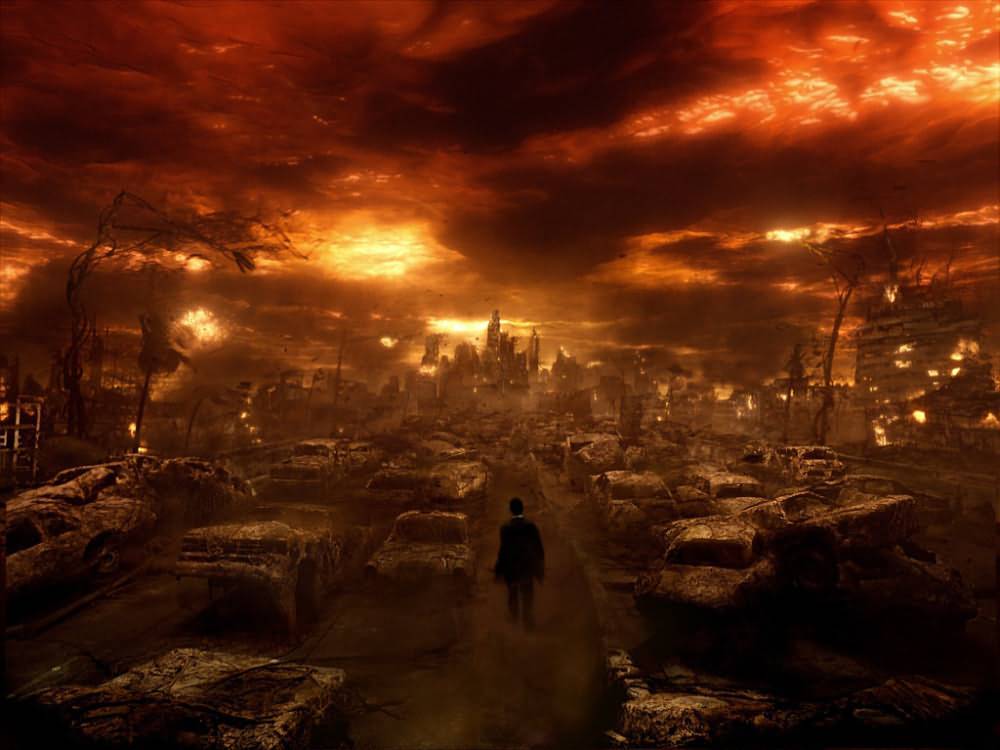
Persecution of Heresy - Beginning of the Great Divide Between the Old and Modern World

Every day there seems to be another grimoire manuscript that is being published by some high quality book publisher, and it would seem that the volume of published and available material hasn't in any way diminished the demand. It would appear that an important factor for the popularity of the old grimoires is vested in the magical idea that somehow we should emulate the magical practitioners of the late middle ages and early renaissance. In fact, there is a movement within the practice of ceremonial magick that stipulates that all anyone really has to do is to choose an appropriately antique grimoire and practice it exactly as it was written, with no substitutions or revisions.

There is also the mind-set that such works were written by masters of their craft, and that they should therefore be wholly adopted without any changes or revisions. Thus, in the discipline of high magick, we seem to be overrun these days with individuals who are purists and nearly fundamentalistic in their approach to working with the old grimoires. Happily, I can state that I am not one of them, and I think that such an attitude is problematic at best and an insufferable arrogance at worst. Let me explain what I mean by this loaded and opinionated statement.

It’s my opinion that these purists are the occult absolutists in our field of magick. They are the ones who vow a strict adherence to their sources and who condemn others who are not so strict, in other words, those terrible gadfly revisionists - of which I am a proud member. I believe that flexibility and mutability are the hallmarks of true creativity, and their opposite are often the sign of a complete lack of imagination and creative insight. This is quite an unusual state of affairs in the annals of magick because I believe that each magician must create his or her own magical practice from whatever material and lore is available. Certainly, we have an abundance of materials available now that weren’t available just a few decades ago, yet to be hidebound to any one single source is to be, in my opinion, quite self-limiting.

I suspect that the magicians of the previous epoch had no problem borrowing their lore from multiple sources, and the diversity of antique grimoires even with the same title is a remarkable testament that this was so. With ever greater resources at our disposal, we live in a time when we can craft our own system and technique of magick from many different and diverse sources. Doing so is nothing more than following an age old technique of borrowing and appropriating the occult lore and practices of a previous age. I suspect that the magicians of the past age, both great and obscure, borrowed and appropriated their lore from whatever sources they had available to them. Should we be so different? (Of course, this presupposes that one knows enough about magick to be able cobble together a magical system, but that is another topic altogether.)

There are at least three different approaches that one take to utilizing the material found in the old grimoires, and four, if we count the approach of not using them at all. These approaches can be labeled traditionalism, reconstructionism and revisionism. I have talked about these three different approaches several times before, but I want to discuss them in context of the old grimoires. Of these three, the traditional path is the most problematic, since only if one has access to an initiatory lineage that incorporates this lore would it be possible to call oneself a traditional grimoire magician. Nearly all of us must rely, one way or another, on the public materials available. We can attempt to develop a magical practice based on the best historical information available and through that method, we can approach the full employment of one or more of the antique grimoires. There are a lot of problems with this approach, but it should be noted that grimoire reconstructionism is based on an assumption that whatever is unknown or omitted in that lore can be developed using modern sources or one’s creative imagination.

One other key point is that the further we go back in time, the less details that we know about the culture, people’s basic beliefs, basic language used, assumed religious practices and a myriad of other minutiae. Reconstructing a magical system must also include reconstructing the cultural matrix from that specific time period in order to be really effective, and even with the most painstaking research, only fragments exist for cultures that existed merely half a millennia ago. Therefore, reconstructionism, by definition, must always be incomplete and filled out with suppositions and even one’s creative imagination. Thus they become more like an “as if” proposition rather than a perfect reflection of what once existed.

This is why I consider revisionism to be a much better and simpler prospect than attempting to reconstruct an antique practice. You can even start out with a tradition, like for instance, the Golden Dawn, and upon that foundation, build and add appropriate various materials, techniques, themes, tropes and practices from the old grimoires.  A magician needs to know and understand what is needed to build out a new magical functionality, and armed with this knowledge, then choose the appropriate grimoire and harvest from it whatever is needed. In this manner, material is extracted and placed into a proper occult discipline where it will become more or less redefined and used appropriately within of the context of an already established magical practice.

The reason why I am much more inclined to taking a revisionist perspective to all magical lore from the middle ages and the renaissance is that I believe that there is a massive gulf that lies between us, who are living in the post-modern age, and those who lived in the previous epoch. That gap has made a powerful difference between not only how one works magic today versus those previous times, but it also makes a great difference between the post-modern magician and the magician of middle ages and early renaissance. Our beliefs, expectations, approach to religion and spirituality, and our cultural determinants are all completely and radically different. Thus, a modern magician is not at all like his or her peer from the earlier epoch, nor is the world that we live in and our cultural matrix in any manner similar.

If we were to go back in time to the period of the late middle ages or early renaissance when the grimoire system of western magick was being formulated, we would find ourselves in a much different world. Roman Catholicism would be the dominant and primary faith, and all its beliefs and practices would be commonly known and engaged in by nearly everyone, from serf to the highest aristocracy. The whole notion of a secular approach to governing or to a knowledge of the world would not yet exist. So, too, would the notion of an existential individuality and self-determination. The Pope would be the absolute spiritual authority throughout most of Europe, and it some cases, he would also be a temporal authority. The aristocracy would be just beginning to exercise their independent authority, but no one would be foolish enough to directly countermand episcopal dictates. The lords who ruled the various kingdoms and principalities owed their temporal authority to the church, who sanctioned their rule through the artifice of their various offices. This was not too surprising, since these lords were from the same dynastic families that also held positions of power in the church. It was often prudent for the aristocracy to promote their offspring into positions of temporal power as well as within the church hierarchy.

The world of the greater Catholic domain was a complete, seamless and total world view, encompassed by an annual festive calendar and dominated by a monolithic religious belief system promoted by continuous and periodic religious practices. Nearly everyone participated in it, and it would be mostly inconceivable for anyone to exclude themselves from participating. It was considered a universal faith and practice, which is what the word “Catholic” literally means.

So, what would the typical literate magician of the late middle ages or early renaissance be like? First off, he would be a devout Catholic and fairly conservative in his religious beliefs. He would see visions of angels, demons and experience the powers of the saints first hand and it is also likely that his piety and zeal would have pushed him into the study and practice of ceremonial magick. Since he was literate (and often in more than one language), then he was either a member of the upper class or a trained cleric, since literacy had a certain power, mystery and prestige all by itself, especially to the greater masses of the population who were illiterate. He would have had access to enough resources to be able to equip himself and to acquire the privacy to be able to work his rites alone and unobserved. A poor man would have neither had the time nor resources to practice magic, and certainly, being alone and unsupervised would have been something of a great privilege. To outsiders, the ceremonial magician would have appeared to be no different than anyone else, he would have been the very model of religious piety and class privilege, and therefore typically beyond suspicion in regards to impious or heretical behavior.

A magician from that period would have been proficient in the inherent disciplines of discursive meditation, contemplation, the Holy Office with its eight daily periods of prayer and meditation, and the use of special mass rites to charge and empower his regalia and fortify his work. He could do all of these things, including ceremonial magick and likely get away with it because he was a member of a protected and privileged elite. Even Agrippa was a member of the (petty) nobility and no commoner. He had certain privileges and responsibilities associated with his station. His life, with its service to liege lords, training and social expectations associated with his class (from social etiquette to military training), his religious education and continuous engagements with a pious religious practice, all of this, would be quite foreign to us today.

It is also my opinion that an educated man living in that time would have been easily able to attribute to his life and its various occurrences as being the outer manifestation of the grace or doom of God and his saints, angels or even, the Devil and his minions. A magician would have made use of the Catholic liturgy (including the techniques of reversed exorcism used for invocation) and the monastic discipline to be able gain the proper mind-state necessary to see and thereby command the spirits to be found nearly everywhere in the world. The domain of Spirit was not difficult to access for the average person and in fact, it wasn't seen as a separate world at all. So the methods used to fulfill the need for the first stage of an evocation (spiritual purification) were simply a variation of what was already practiced in the typical monastic discipline.  

My point is that the world that the magician of the previous epoch lived in was one where magick flourished, and the many varieties of grimoire magick had their origin in those times. According to the sparse historical data available, everyone seemed to practice some kind of religious based magic, which later would be considered to be steeped in religious superstition, but at the time, religious faith was a very powerful element in the world. Science and religion were interwoven in a manner that would be strange to us today. A magician in the previous epoch could easily employ one of the many grimoires secretly available and he would also know how to activate the spiritual practice behind the book, since he could merely perform the religious rites and practices already available to him, and it would be sufficient. However, this is no longer true, and there are some compelling reasons why that is so.

The first thing that happened that began to radically change the European culture was the reformation. Over a period of fifty years, beginning early in the 16th century, the entire religious perspective permanently changed with the advent of Protestant Christianity. Catholics, faced with such a challenge, zealously promoted what became known as the counter-reformation, and the periodic but constant warfare between Protestant and Catholic ideologies indelibly changed both religious traditions. Suddenly, Catholics and Protestants alike became highly intolerant of any kind of spiritual deviance, heresy or assumed apostasy. It became a dangerous time for anyone to practice ceremonial magick, still the books were still clandestinely produced, circulated and elaborated upon despite the risk. However, piety and conservative opinion, which would have tolerated a certain amount of magical practice, now had no tolerance whatsoever and this resulted in the persecution and execution of many who once were a part of the protected elite. What this ultimately did was to purge from both traditions of Christianity many of the techniques and tropes that were used in ceremonial magick, transforming the typical magical practitioner into anything but a pious and conservative religious adherent. It also had the effect of removing all magic from the practiced liturgy, a process that continues today. 

Still, we can assume that ceremonial magick was likely practiced by some individuals, even though there is scant proof of that. However, from a more realistic perspective, it would seem that the literature itself had a certain sensational vogue amongst savants and affluent collectors who helped to spread it all over Europe. Over time, the social calamity of the reformation began to lose its passion on both sides, and the power of the Catholic church began to diminish while the power of temporal authority slowly became greater. By the end of the 17th and through the middle of the 18th century, it is likely that ceremonial magick was being practiced by a greater population of select individuals, most of whom would be considered more like occultists (or eccentric antiquarians) as found in our modern age than pious exponents of the religious status quo.

Even so, while ceremonial magick was having its own kind of renewal during this period, two more events occurred that made the gap between the previous epoch even wider, and these were the Age of Enlightenment in the 18th century, to be quickly followed by the Age of Science in the 19th century. By the end of the 19th century, only occultists had an interest in the magical writings and practices of the previous age, and the materials that they studied became ever more rare and difficult to acquire. The rest of the European world had become secularized, literate, educated and indoctrinated into science and socially empowered by democracy, and in the process, the late medieval mind-set of ceremonial magick and its cultural context were irreparably lost. It became the provenance of individuals like Mathers, Westcott, Crowley, and Fortune to resurrect the art and practice of magick, but what they derived from their studies and experimental practices was something that was quite new and infused with modern sensibilities.

While the times have profoundly changed from the previous age, magick has once again become relevant. However, the mechanisms and techniques of performing evocation now require a considerably greater effort to achieve the proper initial mind-state. Thus, we modern practitioners are forced to adopt a regimen of mind control that is considerably more elaborate, deeper and engaging that what the practitioner of the past age would have employed. In fact, to engage the Spirit world, we are forced to adopt ecstatic methodologies more reminiscent of shamanism than the merely pious practices required of the magicians of the previous epoch. Times have changed, and so has the discipline and practices of the ritual or ceremonial magician. So it would seem logical that in order to appropriate the lore of the old grimoires, we must first have developed and mastered a modern tradition of magick. It would also seem to be folly to expect that the old grimoires can be effectively practiced as they once were, given all that has happened in the last five hundred years.

Frater Barrabbas

Thursday, January 10, 2013

Magick and the Art of Self-Deception


“There is nothing more insidious, in my opinion, that can happen to anyone who is a magical practitioner other than wholly believing in their own PR.” - quote from Frater Barrabbas Tiresius

We all tell stories to our friends and families about ourselves and our experiences, but much of those tales are a mixture of fiction and fact. Sometimes the quantity of those facts are greater in proportion to the amount of fiction and sometimes it is quite the reverse, where only a smidgen of fact can be found with a lot of fiction. I guess it’s human nature to tell tales, and often they are humorous anecdotes about our lives and personal experiences. This process of telling and retelling tales about ourselves and our experiences is probably one of the most important factors for maintaining a long term memory. It also has a powerful social effect, either elevating or making more human (and accessible), the various episodes of our lives.

Magicians are no different when it comes to telling tales about themselves and their exploits, and I usually refer to these magical tales as “Tales of Power,” with a very brief nod to Carlos Castaneda. Sometimes a magician will embellish his tales and other times he will edit out the more revealing or embarrassing occurrences. Magicians who are trying to sell themselves as teachers, writers or magical consultants will often assemble an array of tales and exploits that depict them in a certain competent and alluring fashion, omitting those times when their magic went awry or failed altogether.

This aggregate of tales, adventures and exploits often build up a public persona that the magician uses as a marketing device. There’s nothing wrong with any of these activities, and they seem to be vested in the very nature of what it is to be human. The problem arises when magicians begin to believe that all of the tales and hype that they have put out about themselves are completely true. When a magician forgets who he or she really is, then problems will naturally arise. Delusion is a magician’s curse, and believing in your own public relations dossier is one large step down a very slipper slope. This is why I wrote an article many months ago explaining that I am a real person behind the pen-name and occult personality of Frater Barrabbas, and that I am not Frater Barrabbas.

In order to practice ritual or ceremonial magick in a competent manner, the operator must adopt a magical personality, also known as a “persona.” This process begins with the adoption of a magical name and motto, and then builds up to include one’s accomplishments and spiritual alignments. This magical persona becomes something of a fictional being, founded on the reality of the actual training and expertise that the magician has achieved, but also based on an initiatory pedigree and backed up by an association with various deities.

Some magician collect certain jewelry, robes and vestments, and even go so far as to wearing masks, makeup and assuming a specialized personality. Others like to collect initiation pedigrees from many different organizations to burnish their magical reputation, or just brag excessively about some of their accomplishments. After a while, a magician can notice the very shift in his personality when entering into that persona to either work magic or function as a public magician. My lady, Grace, can pretty much tell when I am in my mode as Frater Barrabbas instead of the real person that I am, and sometimes she delights in letting me know when the occult baloney factor is getting rather deep. Some of my close friends also let me know when the persona of Frater Barrabbas is getting a bit overbearing or interfering with a true social exchange. This was more of a problem in the past, but it still occurs from time to time.

Therefore, I have learned to function typically as a low key individual without any of the magical bombast when behaving as the normal middle aged man that I truly am, and to deliberately avoid being turned “on” unless my role as a magician requires it. This is also why I disguise my real name and identity from that of my magical persona so I can at least distinguish between them. I am certain that other magicians have this issue to deal with and have dealt with it each in their own different manner. A similar phenomenon can also afflict actors and especially comedians, but it also haunts magicians who have a larger than life magical persona.

So, a magician must balance the use of her persona and its importance in magical workings and function as a real person in a world that is polarized by the sacred and the profane. Keeping a certain degree of humility and objectivity is very important, and also knowing when one is operating through the magical persona and maintaining that function in its proper social context. It’s OK for me to be Frater Barrabbas when teaching, working magic or initiating others. It is bad form if I act through the Frater Barrabbas persona in normal social settings, or even all of the time and somehow confuse that persona with my real self. However, when I operate in a social or magical setting as Frater Barrabbas, there is also the human element that I make certain is always maintained. I may assume, for a brief moment, the vista of my Deity, but I am still a mortal human being with all of the associated flaws and limitations, including and especially, mortality.

Speaking of the real person, while I may have successfully achieved quite a bit of what possibly could be considered extraordinary magical operations, I have also profoundly failed at others and my overall progress over the decades has been a struggle with my own flaws, personal bad habits, delusions and misunderstandings. I am also getting older every year, and sometimes I wonder if I am getting any wiser? What does seem to be my ultimate fate is old age, enfeeblement and finally, death - just like everyone else. Whether I will be remembered as anyone of influence or importance is highly debatable, despite what I might state when I am pimping my magical persona to the public.

My life has been a series of follies and foibles, and at times I seem to be more like Don Quixote than Dr. Strange, chasing after delusions and passionately promoting fallacies. What I have learned over the many years of life is to laugh at my foibles and to make light of them for others to enjoy as well. If I can’t be the sorcerer supreme, I will at least be one of the better jesters in that court. And, as Lon Milo Duquette has proved time and again (and I am in perfect agreement with this sentiment), there’s really no fool like an old fool.

The key to maintaining balance, grace and sincerity in life’s eternal juggle of the sacred and the profane is, of course, humility, objectivity, flexibility and an open mind. I might be a magician, but I am also just a man with certain virtues and obvious flaws. As the cartoon character Popeye the Sailor Man says (all too often): “I am what I am, and that’s all that I am!” So don’t buy too heavily into your own PR, and keep your magical tales of power sprinkled with some tales of personal folly and human weakness.

Frater Barrabbas

Saturday, January 5, 2013

New Year 2013 - What Aspirations May Come


Here we are - another year, another set of challenges to achieve. Most of 2012 was taken up by my mundane job, which left little time for anything else. That was true even of the first day of the new year, when I had to work for 14 hours to get the old database server into a state where it could continue to function normally for the next month or two. The project that I have been working on since March of last year continues, although most of my work is completed and has been fully operational since November. This last arduous task represents the final (I hope) bit of maintenance required before the users can completely migrate over the new server architecture. Yes - Murphy (of Murphy’s Law fame) continues to have quite a good laugh at me, but incrementally, I am approaching the finish line. Once past this line, Murphy will have to find another technician upon which to burnish his sense of humor, since things will descend into the dull and predictable operational humdrum very soon.

This also means that the much vaunted three weeks of vacation that I was to enjoy found me intermittently having to work on project related tasks instead of freely doing whatever I wanted to do. The time that I did have, I spent lavishly on my relationships and not so much on magick or occultism. I am hoping that things are going to be settling down at work and I will be given a period of respite to catch up on other things. I can imagine that my readers are getting pretty tired of me complaining about my mundane job as much as I am tired writing about it, but soon things will be back to normal, and I can then find some real magical mischief to fully engage my magical persona.

My temple area has seen the greatest extent of neglect, since I haven’t worked any magick since completing the seventh and final planetary talisman. Things have been just too busy for me to even contemplate another magical project. I have made offerings of incense to the Gods and my ancestors, but not much beyond that. However, I have decided that the time is right to start picking up the threads of my magical practice and start engaging in some of the projects that I had to postpone. I also need to reconnect and align myself to my personal Deities and my pagan spirituality on a deeper and more profound level than what I have been doing in the last several months. In a perfect world, none of these kinds of interruptions would ever occur, and my occult and magical discipline would be seamless and without any breaks in concentration or effort. However, the real world requires me to change my priorities and focus my efforts on this or that project, whether of the mundane world or magical regardless of what I would like to do. It just so happens that my primary focus for the last several months has been my mundane job, which also happens to pay the mortgage and puts food on the table.

As usual, I begin each year by putting together a list of things that I would like to accomplish. I might not succeed in completing all of the tasks, but if I can manage a few of them, then I consider that year to be successful. That list starts out containing the things that I didn’t get around to doing the previous year, if I consider them to be important and relevant. High on that list is my desire to complete the workings associated with what I have called the Portae Tenebris working, which is the opposite of the Portae Lucis. I have placed my seven talismans on my central altar protected by a veil with the intention of doing these sets of rituals, and then I found no time to actually perform them. The talismans are still sitting there where I last left them, waiting for me to engage with this magic. I have decided that even though the Winter Solstice has come and gone, we are still in the great period of winter darkness. I am planning on picking up the threads of this working in the next week or so, and thereby bring it to completion.

Another pair of magical challenges are for me to invoke at least four of the spirits of the Theurgia-Goetia using the new ritual lore that I developed and wrote some time ago. I would also like to perform some invocations of the ha-Shem angels and some Goetic demons. I am hoping to achieve these workings between now and the end of April, when winter begins to recede from the northern Midwest. If I get to perform some of these workings, then I will have quite a bit to report about my experiences, and I will be able to say that the new ritual lore has been thoroughly vetted.

Since I have recently published my book “Magical Qabalah for Beginners” and have laid down an excellent regimen of practical work, I would like to assemble these rites and practice them as a regular part of my spiritual and magical discipline. While I have done most of these exercises at one point or another of my magical career, I have not put together a complete discipline, and I believe that such a regulated practice would really help add a greater depth and spiritual dimension to my magical and liturgical work.

This month I will be giving a mini-workshop and hosting a book signing for my book, Magical Qabalah for Beginners at two local occult bookshops in the Twin Cities area. If you happen to live in this area or might (for some strange reason) be visiting at either of those times, I would welcome your attendance. The mini-workshop will cost the modest sum of $15, but the book signing will be free. Here are the times and dates for these two events.

Eye of Horus bookstore - January 20, 2013. Mini-workshop - 11 am to 12 noon, book signing - 12 noon to 1 pm.

Magus Books - January 27, 2013. Mini-workshop - 2 pm to 3 pm, book signing - 3 pm to 6 pm.

Other things will be happening as well through the course of the next three months, and I will inform you about them in advance on this blog. One item I have to report is that due to some scheduling conflicts, I won’t be attending the Pantheacon convention this year. I will miss seeing some great friends that I have made there, and also miss out on promoting my new book, but that’s the way things turn out sometimes.

I sincerely hope that the new year, 2013, will be one that is rewarding, successful, joyful and full of hope for you and your loved ones. At least the last two digits are interesting. I have always felt that as a witch, the number 13 was both lucky and auspicious. I start this new year with a bit of optimism and witchy anticipation.

Frater Barrabbas

Friday, December 28, 2012

Symbols - Markers of the Spirit World


One of the most crucial elements to any kind of successful occult speculation is to understand the nature of occult symbology. Because most forms of occultism combine study with experiential based research and experimentation, an occultist quickly realizes that symbols aren't just window dressing or “eye candy.” While reading and studying expositions of various systems of symbology, the occultist must also pivot and take those same symbols and experience them as a form of reality within the inner planes of the mind and the spirit. This is done through the techniques of meditation, contemplation, and of course, ritual magick.

Perhaps the greatest insight that I have ever had was the axiom that true magic was found in that powerful and magical place between the mind and spirit where “Thought becomes form and form becomes thought.” What drives this process of spiritual and mental transmutation are occult and religious symbols. They are the veritable language that bridges the worlds of flesh, mind and spirit.

What I have stated before in previous articles about the Qabalah (and I make quite clear in my new book “Magical Qabalah for Beginners”) is that in order for that system to be truly realized, the occultist must make the many symbols, concepts and analogies become real and alive in his or her mind. This is also true of any other system, or occult meta-system or magical system: It must become a living system or it has no meaning or significance whatsoever. This is accomplished by performing very deep and periodic contemplation sessions on significant and key symbols of one’s specific occult tradition or adopted system. It would appear that performing this work on a regular basis will trigger all kinds of related phenomena, and ultimately make that system become a living tradition within the mind and spirit of the operator.

Why is this kind of contemplation so critically important, and what actually happens when one focuses on key or strategic occult symbols within one’s tradition? How does one transform a documented system into one that truly lives within the mind and soul? These are really important questions, and answering them will demonstrate how beginning students can advance themselves into a true adherent of an occult tradition. It is a methodology that is generally taught to students who seek training and initiation in a traditional occult organization, but for those who lack that kind of sodality, it can also be gained through hard work and a disciplined regimen of meditation and contemplation. However, an added dimension can be obtained through mental immersion and ritual work.

The first question that we need to answer is to explain exactly what a symbol is (as opposed to a sign) and how it acts as a sign post indicating the brief intrusion of a certain kind of hidden topology which would be called the linguistic “deep structure” residing wholly in the domain of spirit.  As the ocean’s waves sometimes subtly show by their behavior the contours of the ocean floor, so, too, do symbols show the outward and paradoxical nature of the structure of the spiritual reality. We cannot accurately describe with words or mentally contrived models the nature of the spiritual world since these are devices of the mind, which is greatly subordinate to the domain of spirit. We can only perceive that place of spirit through techniques and methods that overcome the natural obstacles and biases of the mind. These techniques are meditation, contemplation and ritual (or a combination of them), but the apperception of spirit can only occur when the rational mind is temporarily put aside or somehow shunted, allowing for the full realization of spirit by what Ken Wilbur has called the Eye of Spirit alone.

As I have stated rather succinctly in the second chapter of my newest book, “Magical Qabalah for Beginners,” unlocking the secret of strategic occult symbols is the key to unlocking any occult system or tradition. I use the Qabalah as the focus for what I have written, but it could be applied to any occult system.

“A key concept here, and one that is probably the most important point of all, is that the Qabalah is not just a bunch of lists or an interesting looking glyph. The Qabalah encapsulates symbols, and these symbols are either religious or occultic in nature, or both. Symbols should not be confused with signs, which is a common mistake that we all make. Signs are representative; they are, in fact, simple place holders, like a stop sign or a railroad crossing sign. Symbols are dynamic living processes or functions, like the Wiccan Pentacle, the Christian Calvary Cross or the Jewish Hexagram called the Magen (Shield of) David.

Symbols are conscious markers for deep level psychic processes that are transcendental and transpersonal, and I might add, usually mysterious to most people. Focusing on symbols can give one access to deeper layers of meaning and collective significance. Sources of symbols are numinous, archaic and inexplicable. With these concepts in mind, we can say something about the collective symbolism of the Qabalah, which contains the symbology of all the religions of the world. The religious symbology of the Qabalah is a living, breathing aggregation of functions, almost like a living body itself.

To access the Qabalah, we need only to access the various symbols of the Qabalah, and we do that through the techniques of meditation, contemplation, path working and various forms of theurgy. This methodology of accessing the symbols of the Qabalah is called the practical Qabalah, and it makes the symbology come alive in our minds. Also, if we accept that the symbolism of the Qabalah is alive, then even organizing these symbols into groups or structures, like the Tree of Life, will have an unintended and powerful affect.”

If we could then imagine symbols as being a kind of signpost with a very long wooden post that reaches all the way to the very world of spirit from our mundane world, then we could understand that accessing them within the mind and through ritual will allow us to contact that other world. What this means is that these occult symbols are indeed very important, and that focusing on them is a critical part of the work of an occultist. Determining the array of symbols within a specific target tradition and then accessing them through meditation, contemplation and ritual will open up portals between worlds and suffuse the mind and body of the operator with the numinous powers and intelligences of the spirit world. This is the methodology that one would employ in order to make the symbology of an occult system alive and fully activated.

Additionally, the very names and attributes of Deities and Spirits are also hooks or indicators of potent spiritual processes active in both the mundane and spiritual worlds. Contacting these being through religious paeans, offerings, oblations and exhortations, or more general forms of focusing, summoning and generalized or specific invocations is a crucial part of this process of enlivening a spiritual tradition. It is highly important for an occultist to establish and develop an intimate relationship with those spiritual entities that are associated with a given tradition. Failure to develop a deep and powerful relationship with such spiritual beings would be considered a profound act of disrespect and cause the whole process of awakening a tradition to fail. This is also where I incorporate the practice of spiritual alignment, including the ritual of Godhead assumption. I believe that this is a key practice to activating a spiritual system.  

Occult symbols consist of religious symbology as well as other elements that aid in the definition of spiritual concepts that are beyond the ability of the mind to conceptualize. These are the various attributes that the occultist focuses upon and systematically activates so as to completely awaken and enliven his or her targeted tradition. These symbols can consist of (but are not limited by) the following list.

  • Geometric religious symbols - such as the point, circle, equal lateral triangle, cross, pentagram, crescent moon, star, hexagram, ankh, septagram, vesica pisces, triskellion, stang (pole with horns), tetractys, Tree of Life, Sanscrit word for Aum, etc.


  • Human body parts (given special significance) - eyes, hands, genitals, heart, mouth, solar plexus, tears, blood, etc.


  • Essential religious nomenclature - such as the names of Gods, Goddesses, Demigods, Avatars, Angels, Daimons, ancestors, various earth-spirits, etc. These beings are usually associated with various attributes and qualities, and these, as well as their names, are used to contact them.

  • Mundane human artifacts such as a key, mirror, musical instrument, cup or chalice, plate, spoon, string of beads, ring, specialized jewelry, article of clothing, mundane tool, etc.


  • Common physical objects that are invested with significance, such as fire, certain trees, flowers, animals (totemic), various geographic features, rivers, lakes, hills, mountains, the sun, moon, eclipses, stars, clouds, night sky, rainbow, sun rays, storm clouds, lightening, etc. This list can also be augmented by human fashioned edifices, such as monuments, temples, churches, mosques, synagogues, funerary sites, terra-formed sacred sites, etc.


  • Regimen of typical occult symbols - colors, incense, perfumes, gemstones, herbs, geometric signs and constructs (talismans, characters and sigils), metals, minerals, magical weapons or tools, sacred alphabets or ciphers, specialized glyphs, etc.


  • Philosophical concepts (representing higher conscious functions) - love, union, compassion, blessing, sacredness, holiness, enlightenment, illumination, ecstasy, redemption, rebirth, etc. This includes all myths and analogies associated with a religious tradition. 


There are many more qualities and specialized attributes to consider, and I have listed here only the more important ones. An occultist should engage in an in-exhaustive search for all of the most important and strategic ones associated with his or her targeted tradition.  

One of the most important tasks that occultists undertake is to determine the nature and qualities of all of the important symbols associated with their tradition and to assemble and array them into various comparative lists, using some kind of unifying meta-system to achieve this end. In my specific situation, I use the Qabalah to organize the symbols that are important in my occult tradition. Also, by focusing on these symbols using the techniques of meditation, contemplation and ritual, a meta-system of some kind can be revealed if one is lacking. Revelations of such meta-system structures, usually in the form of a glyph of some kind, is often proof that the occultist is successfully enlivening his or her occult system.

The ultimate goal for an occultist is to make his or her spiritual tradition, including all of its symbology and its unifying meta-system, a living, functioning and fully activated being. I call this being the Greater Dweller Within, and it more often is either slumbering or dreaming in the typical person rather than being fully awake. (So, perhaps the most important concept here is that the Sleeper Must Awaken, to steal a concept from the Dune series.)

This overall occult task, once achieved, awakens one’s higher spiritual self and allows for an eventual but immanent union to occur between the conscious mind and the super-conscious spirit or higher self. The impact of awakening and enlivening a spiritual tradition is likely one of the key elements of achieving what magicians and occultists call the Great Work.

Frater Barrabbas

Saturday, December 22, 2012

Dec 22 - World Didn’t End - What To Do?


So, here we are, the day after the supposed catastrophic Mayan Calendar World ending event, and guess what, the world didn't end. All the New Age preparations, hopeful and wishful thinking just didn't materialize anything special or noteworthy. It’s just another day like most others, with good news, bad news, and no news. There was no catastrophic ending or beginning, other than whatever each and everyone of us made happen by our own work or actions.

While auspicious times occur with some periodic frequency, we must take advantage of them through an arduous regimen of disciplined preparation and intensive magical work. Nothing that is worth anything comes easy, so we must be prepared for a long period of work, self-struggle and seemingly endless toil. Even when enlightenment is achieved, we are not free to lessen our life’s burden, and in fact, often our burdens become even greater when we achieve a certain degree of spiritual and magical greatness.

As a practical minded person I have always believed that we make our own good or bad luck, and that the key to true success is being able to take advantage when opportunities present themselves. Not being able to perceive opportunities or being unwilling to take advantage of them when they arise could be the reason that many people fail to evolve and grow as individuals. This is true in the world of business as well as in the world of magick and spirituality. So, now that the world didn't change over night as some might have expected or wished, the rest of us can get on with our lives pretty much in the same situation as we were before this supposed auspicious event. What you should  do when miraculous events don’t materialize is to put your metaphorical shoulder to the effort of slowly remaking and evolving yourself.

Also, by the way, have a happy Yule weekend - play safe and stay safe.

Frater Barrabbas

Friday, December 21, 2012

End of the World Tonight?


While many of us are celebrating the pagan calends known as Yule, others will be hopefully waiting for the most hyped auspicious day since, well, the last overly hyped auspicious day. Some of you remember the direful warnings of Y2K, which of course never materialized. Tonight is the last day of the Mayan calendar, supposedly, but actually it is the zero year of the zero day, and like any incremental measuring device, it moves on past that incremental anomaly. So, what will you be doing on the last day of the world, the aftermath of which will be either the end of the world or the beginning of a new world, which is pretty much the same thing? Will you be meeting New Age folks on some mountain top waiting for the UFO’s to come and take you away from the devastation? Or will you be celebrating the beginning of Yule with friends and family?

As for me, I will be spending the last day of the world with my two best friends in Milwaukee, drinking in an Irish pub. It will be great time, and if I can avoid a certain degree of excess, I won’t be suffering too much from it during the next day. All I can say is to enjoy the festivities and avoid all of the hype. Auspicious dates are subtle things and are only made real and valuable when they are incorporated into extensive magical and spiritual preparations. However, such a regimen will take even the most mildly auspicious time and make it a life-changing event. It is the methodology and not so much the times, although they can help and add a certain amount of profoundness to a working.

Anyway, tip a glass this evening to your favorite Solstice Gods or Goddesses, and make a wish for better times and better tidings. Then, on the next day after the haze has cleared, you should shrug your shoulders and get back to work.

Frater Barrabbas

Thursday, December 20, 2012

Magical Qabalah for Beginners


My book, Magical Qabalah for Beginners, is now available for order from most book stores, online order sites and the Llewellyn Worldwide publications website, located here. Since I just got my box of books from Llewellyn, I can assume that other suppliers will also have copies available too, or at least over the next two weeks. I have put quite a bit of time into this work, and it's selling for a very reasonable price. 

Although the title places this book within the “For Beginners” line, it is not merely for beginners, nor actually, is it a beginner’s book. I consider the Qabalah to be a pretty engaging topic for most beginners, so this book assumes a bit more than a complete beginners repertoire of knowing nothing about the occult. However, even someone who lacks an in-depth knowledge of the Qabalah and deep occultism should find this tome useful and insightful. I even managed to include some rather advanced topics in this work, so the advanced student will find something new and engaging while perusing this book.

Why did I write this book? What was the inspiration and purpose that sent me down a path that took two years to produce this published book? Aren't there already far too many books on the Qabalah currently in print? These are pretty compelling questions and if I am to promote this work, I should at least thoroughly respond to them.

I will quite frank and state that this book project was not my first choice, since I would much rather write about magick, for obvious reasons. However, when I put this proposal together, I didn't think that it would be such a long and arduous process. What I didn't realize at the time was that some of my knowledge of the Qabalah was either out of date or poorly researched. I was amazed at how much urban myth I had within my mind, erroneously thinking that it passed for some variation of truth. In researching this book, I discovered that my previous studies of the Qabalah were neither comprehensive or exhaustive. I can at least say that my knowledge today is much more extensive than it was previously, and that I have come to a new understanding of the Qabalah. Yet as I took up the task of writing a new introductory book to the Qabalah, I decided that I wanted to write a book as good if not better than William G. Gray’s book “Ladder of Lights.” This was probably the most important book that I had ever read in my occult career, and I wanted to produce a more modern book that could even perhaps supplant it. Only time will tell whether or not I have produced a work as useful and effective as what Mr. Gray wrote so many years ago.

In approaching this book, I wanted to produce a new historical narrative about how the Qabalah evolved over time as well as divide the book into a theoretical section and a practical section, representing the two modes of research and speculation as well as practical application. I also wanted to present to my readers some specific practical exercises that they could use to empower and illuminate themselves. I also desired to assemble a syllabus that would aid anyone in ultimately mastering this topic. It is my earnest belief that I have accomplished all of these goals as well as making this abstruse subject accessible to any educated reader. For this reason, I believe that Magical Qabalah for Beginners is a comprehensive book that any occult student will find useful over the lifetime of their study and spiritual practices. I also think that a book that contains all of these things and more is worthy of anyone’s book shelf even though there are many available books on the Qabalah.

Although I have tried very hard to make certain that all of the knowledgeable elements of this work have been fully vetted and carefully researched, it is possible that there might something here or there that might not agree with what others have either read or even practice. I have not been able to produce a work of perfection, but I do believe that I have produced something that is mostly reliable and useful. I think that is probably as good as anyone can accomplish given the tight time frame for completing the manuscript and presenting it to Llewellyn.

Finally, I would like to say that working with Llewellyn Worldwide has been a really wonderful and rewarding experience. I have learned a lot in the process, and I can say that everyone that I have dealt with has been fair, open minded and helpful in the extreme. I would happily produce other projects for them, and in fact, I am presently doing so. I must say that they are a class act, from start to finish, and I would recommend them to any writer who has a good idea for an occult or pagan book project. If they accept your project, you won’t be disappointed by the final results. The book layout, cover art and internal artwork was, in my opinion, of a very high quality. I am very proud of the final results that is now available to the public to read and ponder.

If you purchase a copy of this book and you have any questions or comments, please feel free to send me an email via this blog, and I will attempt to respond to it in one of my future articles.

Bright Blessings for this upcoming holiday -

Frater Barrabbas